Greetings

Hello fellow ASEAN citizens. Thank you for reading our blogs. You can feel free to participate with our activities. If you feel you want your article to be posted here or want to join our team, please send mail to: samsokrith@gmail.com.
Showing posts with label ASEAN. Show all posts

2019-04-12

Komodo Dragon: the majestic lizard of ASEAN


Imagine yourself wandering in tropical Savanna forest where two sturdy cacao-coloured animals were wrestling to blood for female's approval to mate. This picturesque scene is due to roll from May to August and the female will have a role to lay 30 eggs in the next 9 months. Komodo dragons are the given name to these reptiles residing in the largest lizard island on earth, Komodo.


Riding on the pink oceanic crust, Pulau Komodo (Indonesian) houses the population of 2,000+ and serves as a natural habitat for these dragons to play-fight. The history of this island is said to be discovered by Dutch voyagers in the early 1910s. The dragons were first noted as a creature that ‘breathes fire’ and the report went through Lieutenant Steyn van Hensbroek who took the animal for documentation. Research results came out in 1912. Three years later; laws follow to protect the animal’s significance to the island.


Indulging on carcasses of deers and snakes, Komodo dragons are measured to be 70 kg in size, possessed the ability to stretch itself out to 3.13 meters with the weight of 166 kg. Eating 80% of its own body weight, the great dragon haunts on stealth and power, lurches on its prey at the speed of 16 to 20 kph. The Komodos can distinguish colours through their retina but only under poor vision in low light. Slimy venom in the dragon’s tongue can poise its preys to their deathbed in the next several days. When threatened, the dragon can throw up the contents of its stomach to lessen its weight and flee for safety.


What’s even more fascinating about this resident of Komodo is its powerful gift to new antibiotics discovery. Antimicrobial peptides, infection defense protein, are built in the dragons letting them accomplish an immune wall to the bites of other terrestrial animals. These findings may be also curb everyday problems such acne and pneumonia. Next, we’ll take a look at how reproduction work for the dragons.


Sexing Komodo is a challenge as they themselves still have trouble identifying who is male and female. Female Komodo can reproduce through an asexual process called parthenogenesis meaning no males are participated. The normal mating call would involve in males using their tongue as sensory experience to female's receptivity. After the female is impregnated, Komodo dragons are ready to bond as parents and grow a monogamous relationship.


Komodo younglings spend 7-8 months in shell before breaking into the world through special baby egg-tooth. The dragons then become exhausted and take a rest for a long time to prepare themselves against a treacherous playground where cannibalism is likely to exist! The defense is that these offsprings will have to seek solace in adults or spend a certain pace of their lifetime to camouflage. Komodo reptiles are expected to roam earth for as long as 50 years.


In January 2020, Komodo island is closed to visitors to preserve the animals’ habitat. The announcement to shut down were made by the officials of East Nusa Tenggara, Indonesia’s southernmost province after the news of nine men arrested for smuggling 40 komodo dragons under ‘$35,000/each.’.


Komodo dragons are as cool as dogs with their long tongue that can both scares you off or invite you for further observation.

By Chhem Sreynet

Source:


2017-10-05

Phnom Penh readies for Barcamp ASEAN 2017


The ICONIC BarCamp is back, better and stronger than ever before.

BarCamp ASEAN 2017 returns with visions to share and inspire people greater than any previous events we have ever hosted. The event will take place at ITC, A.K.A Institute of Technology in Cambodia, for 2 days, the 21st and 22th of October from 8 a.m. to 5 p.m. And YES, ever when it is better, IT’S STILL FREE.

BarCamp ASEAN 2017 is not about camping, FYI, it is a community. It is a community that accumulates great talents from all over the country to share their new innovations, ideas, opinions, and so much more. In addition, the participants will have a chance to sit through discussions between big names from various industries and expertise on topics that concern social innovation, technology and entrepreneurship.

One may wonder ‘Why should I participate?’.

Participating in this event would serve you a lot of advantages. Not only can you get to share a lot of topics with people from different walk of life, but you also can be part of the conversation regarding building a better community through technology and social innovation.

One may ask ‘ What kinds of advantages?’

You will have to participate to find out. But let us give you one hint:

Learning is not just a process from classroom alone, you learn from experiences throughout life, and Barcamp acts as a mediator for you to absorb the experiences from great personnels that have achieved a great deal of successes in their life.”

So what are you waiting for? Mark your calendar, Set a reminder, because we are coming back fiercer than ever. We are hoping to see you all on the 21st and 22nd of October, at Institute of Technology in Cambodia (ITC).

            Come, Experience, and Be successful.”

This event would not come into practice without the help from our partners. We would like to express our deepest gratitude toward Ministry of Education, Youth and Sport, Institute of Technology in Cambodia, Smart, EZECOM, and many other partners that support and sponsor our event.

Website: http://barcamp.asia
FB Page: https://www.facebook.com/barcamppp/

See you at BarCamp ASEAN 2017!!!!

2014-12-09

ASEAN Sky Line

We all know ASEAN is a growing region where economic development is undergoing and producing growth and prosperity. Out of all achievements, this time we will look at the sky line of ASEAN: the tallest building of each ASEAN nations. We share the same sky, therefore the same dream. 

NOTE: There are new buildings under construction and on the verge of completion as we speak. This article is last update of December 2014. Should there be any changes in the status, we will promptly work on it. Also, some countries are very difficult to access information regarding what we are looking for. So some might have inconsistent information. Please feel free to comments. 

1. Brunei- One of the richest land in the world, Brunei has attracted millions of tourists to witness its beautiful natural and human-made resort. Particularly, its highest building is approximately 122 meter longs and gorgeously standing in Bandar Seri Begawan. Having built in 1990 and owned by the Ministry Finance, it was called The Ministry of Finance Building and Complex.
Ministry of Finance Brunei


2. Cambodia- Having been acknowledged as one of the oldest civilization country among Asia, Cambodia is an empire full of culture and belief. In 1992, Angkor Wat Temple, the most targeted place for most tourists, has been listed in World Cultural Heritage List. It brings such a pride and happiness to all Cambodian people. Nonetheless, recently there is a huge skyscraper emerges in the heart of Phnom Penh, called Vattanac Capital which owned by Vattanac Properties Limited. Its height is about 188 meters (617 ft) which will be used for Residence, Commercial, Office Rental, and Banking.
Vattanac Capital


3. Indonesia- A country which made up of more than 17,500 islands, Indonesia has won its fame as a heaven of sea creatures. But marine life is not the only thing Indonesia shall be remembered about. Wisma 46, the 250 meters long PT Swadharma Primautama building which was built in 1996 in Jakarta, is a great addition to the growing sky line of ASEAN. You may note that this building appears in the 2004 video game Need for Speed: Underground 2, located in Bayview City Centre. 

Wisma 46


4. Laos- Lao, which is famed for their beautiful landscape, installed a towering figure on the bank of the Mekong River. Erected since 2004, Don Chan Palace has been recognized as the top place which bringing harmony to any visitors. 
Don Chan Palace


5. Malaysia- Little is needed to add for this amazing masterpiece. The Petronas Tower which is located in Kuala Lumpur city, is listed as the the top Commercial building which is the busiest and highest one among all. Its 451.9 meters height just simply amuse everyone. 
Petronas Twin Tower


6. Myanmar- Myanmar also known as Burma is a country full of Pagodas and Temples. One might think that most of its well-known place are pagodas. However if we take a deeper look at each piece of its architecture, we will surprise of its masterpieces and unique. We would never get sick of visit every of its pagodas I promise. Because they were designed in deference and apparently gorgeous. Like many other countries, Myanmar does have its notable and the highest tower in town, it was called Diamond Inya Palace. It is a kind of residential condominium which will be finished in the following year 2015. With its 127 meters, this building owned by Mandalay Golden Wing Construction Ltd in Yangon.
Diamond Inya Palace


7. The Philippines – The Philippines, a home of a diverse range of birds, plants, animals and sea creatures has earned so much attention from other people. It is a must stop-by place for whom enjoy travelling in the natural land. Whereas talking about a human-made attractive place there, PBCom Tower, a 259 meters long with antenna has been listed as the tallest building among many other stylist building in Manila even it was erected since 2010. 
PBCom Tower


8. Singapore – The smallest and the most modern one in ASIA, Singapore has been earning respect and admiring from various countries even from the West. In such a short period of time, it has developed itself to become one of strongest countries in trade and economic. Due to its limited space, you would barely see a small building besides a resident one. But, what is more special about Singapore is that currently there are 3 buildings considered the highest one. They are: Republic Plaza (completed 1995), One Raffle Place - Tower Two (1986) and United Overseas Bank (UOB) Plaza One (1986), all are 280 meters long.
One Raffle Place
Republic Plaza


UOB Plaza One

9. Thailand – Thailand, with Its countless and wonderful natural resorts, its extraordinary services just make every tourists cannot help but note it as a relaxing place for summer vocation or after retirement. Moreover, its usage of technology is just more than expected. They have so many skyscrapers, modern way of transportation and many other means. Ever since 1997, its tallest tower has been built as Baiyoke Tower II within 304 meters in Bangkok.
Baiyoke Tower II


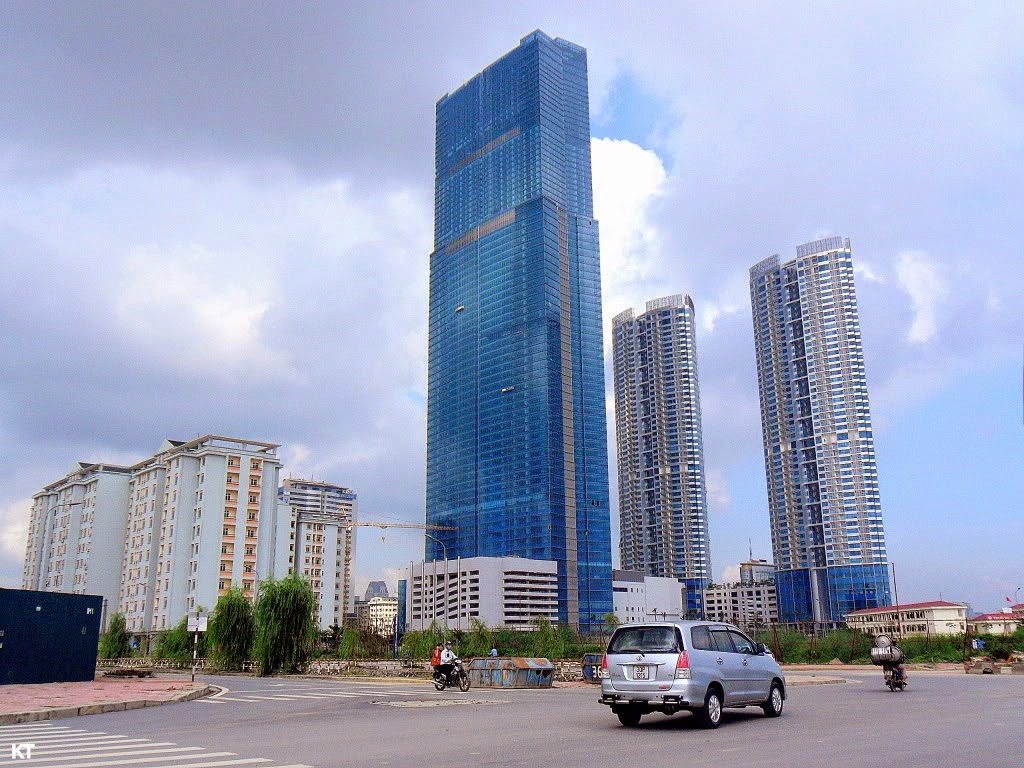
10. Vietnam – Being known through its delicious snacks and foods, Vietnam rarely fail to fulfill its visitor desire. Sometime you don’t need to go to a market by just standing in front of your hotel or walking in the street, you would see tremendous kinds of snacks is being sold in everywhere. However, besides food, there are many things which adored by tourists. In 2011, the highest tower “Landmark 72” which is owned by Keangnam Enterprise, has charmed so many people by its great service in Hotel, office, serviced residences, retail and observatory in Hanoi. 
Landmark 72 Tower


Article by: Dara Ratanakraksmey 
Prepared by: Chhaly Samsokrith

2013-08-01

Congratulation Jonathan Allen Yabut for winning the first ever Apprentice Asia

(Photo courtesy of axn-asia.com)

"Inspiration sparks hope, hope sparks action and actions sparks change."

Jonathan "Jon" Allen Yabut, a senior product manager of a pharmaceutical company in the Philippines, was hired by Tony Fernandes, a renown Malaysian entrepreneur and the "Boss" of The Apprentice Asia TV show, in its first season ever. Having competed with other 11 contestants from across Asia, Jon was acclaimed for his leadership and management skills, most importantly his ability to bring the best our of other people, which have the greatest appeal to the Boss's taste. The 27-year-old Pinoy will receive a work at one of Fernandes's firm with a 6-figure salary in one-year contract.

The Apprentice Asia is the Asian version of famous TV reality show "The Apprentice" hosted by Donald Trump. In Asian version, the Boss is played by Tony Fernandes, founder of AirAsia and owner of English football club Queen Park Ranger Football Club. The show comprises of 12 contestants from Asian countries and aired 11 episodes on AXN-Asia.

Congratulation to Jon, to Philippine, and to ASEAN.

Aseanclan Blog manager

Chhaly Samsokrith

2013-03-03

WWF-Philippines’ New Mobile Game to Raise Funds for a Cause


Words by Ethel Merioles

Remember the Tubbataha Reef incident that happened last month? Just a little background on the World Heritage site located in the Sulu Sea, over 1000 animal species inhabit in the reef, including hawksbill sea turtles, giant trevally (jacks), hammerhead sharks, barracudas, manta rays, palm-sized Moorish idols, napoleon wrasse, parrotfish, and moray eels. Whale sharks and tiger sharks have reportedly been seen in the large coral sanctuary, as well.


The Tubbataha Reef is just one of six marine priority conservation areas that WWF-Philippines are helping, and this time, in an effort to raise funds for a cause, the independent conservation organization released a cool mobile game in February this year.

As part of WWF-Philippines’ fund raising campaign to save marine animals from pollutants and unsustainable fishing practices, a Filipino app development company known as AppLabs Digital Studios designed and developed a time-pressure puzzle game. The game is primarily meant to provide hours of entertainment to any user and at the same time donate to WWF-Philippines’ marine conservation programs. A dollar can go a long way, especially if it means saving the rich marine biodiversity of the Philippines, including, of course, the world-renowned Tubbataha Reef.


The app, dubbed EnviroPop, is currently available for download at the Apple App Store, and will reach the Android market very soon. Sales from the app will go straight to WWF-Philippines’marine conservation programs to help conserve our biodiversity and mitigate the impact of human footprint on our environment. With this app, people will learn more about our environment and essentially save the Philippine seas!
Interested iOS users may try the app for free (Download link: http://goo.gl/kwUKU) or purchase the full version for $0.99 (http://goo.gl/Qec9I). The Android version is scheduled to be released early this year.

2013-02-21

Vietnamese Traditional Craft Village


partially By Doraemon Tran 

For a long time, craft villages have been an important element of Vietnamese culture and economy. The existence of these villages could date back thousands of years, as archeologists have unearthed a 3500-year-old large bronze making center in Vĩnh Phúc province of Vietnam (a little west of Hanoi), evidence of a town specialized in bronze crafting, as well as indication of a complex society with stratification and craft specialization. Into the Han period, craft villages have been well-established in Northern Vietnam with a catalogue of numerous products well desired from India to China.

Craft villages continued to exist in Vietnam throughout the feudal time and well into the modern time, particularly highly concentrated in areas with bustling commercial activities like the capital Hanoi. Visiting Hanoi today, you'll hear the phrase "36 streets of Hanoi". Hanoi today has over hundreds streets, but the 36 "streets" here, or should be more correctly translated as "36 towns" imo, were the 36 areas of the old Hanoi, each of with specialized in a craft product.

How did craft villages form in Vietnam? I'll leave this question to more thorough research, but from what I know, even until this day, most villages in Vietnam, especially the Northern part, have something that they call the "traditional occupation" of the village. This occupation could be making silk fans, lanterns, ceramics, conical hats, wood printing etc.

A sad reality is that these villages are dying, and along with them are the beautiful traditional handicrafts of Vietnam.

This is caused by an array of factors, many of which are unavoidable results of development, industrialization, and open market economy. Mass production made possible by assembly lines and machineries have driven down the price of industrial products (many of which are imported from other countries), making it hard for handcrafted products to compete. Artisans receive less and less profit until they cannot maintain a living by their occupation anymore. Not many young people are willing to continue the traditional occupation of their family when they can make more money following other paths.

Preserving traditional villages has been a concern of many Vietnamese, for it's an important cultural element of Vietnam. Many craft villages, like Bat Trang ceramic village, have existed for many many centuries and have produced high-quality arts and crafts throughout their history and it would be a pity to see them die. Artisans in some villages have tried to change their production methods to cope with the changing market and environment. In the past years, the government have made effort to encourage revival of many craft villages to attract tourists. But the task is harder done than said.

Bát Tràng village, one of the four famous ancient ceramic villages of Vietnam, and the only one that still thrives today.

Established in the Tran dynasty, the village has become so famous that if you read Vietnamese history, hear folk songs or come across countryside proverbs, you cannot fail to meet with this name. Vases of the finest quality or delightful plates for home decor have brightened the homes of the aristocracy, rice bowls have held the food of farmers, and in more recent times, electricity has been transported across the country thanks to ceramic insulators produced in Bat Trang. In the area of arts and antics, Bat Trang ceramics are famous in various places in the world and are displayed in the museums of many countries including Japan, the Philippines, France, Belgium and Turkey.

According to Vietnamese annals, migrant potters from Thanh Hoa province established Bat Trang village in the middle of the 14th century. Situated on the banks of the Red River, close to the capital. Bat Trang had very favorable geographic conditions to develop its craft. The region was also gifted with kaolin reserves that are an essential material for ceramic production. Consequently, Bat Trang ceramics quickly became prosperous. In the 15th century, its finest production was selected to be offered as tribute to the Chinese Minh. The village further prospered throughout the 16th century, producing high-grade ceramic articles for the noble class as well as for the people. From then onward, Bat Trang went through many ups and downs in the following centuries, but its kilns kept burning mid ceramics were still exported to Japan, East and Southeast Asian countries. Today, after orienting its production toward artistic items, Bat Trang ceramics have kept a strong foothold in international markets such as Taiwan, South Korea Japan, German, Denmark, Belgium, France, Holland, Australia and America.

Situated 15 kilometers away from Hanoi. Bat Trang actually covers the two hamlets of Bat Trang and Cao Giang, for a total area of 164 hectares. It currently has a population of 6,500 including some 1,300 ceramics production households Hat operate more than 2,000 kilns. More than 30 companies are also producing and trading ceramics in Bat Trang and the village is buzzing with activities. In 2002, the total revenue from ceramics production and trading almost reached VND500 billions, of which domestic consumption amounted for VND200 billions and export for VND300 billion. Major items for export are utilitarian articles mid art ceramics.


Some products of Bát Tràng village today


But be very careful when you enter the market in Bát Tràng today. I'm serious. Many of the products sold there are fake, not authentic Bát Tràng handcrafts but industrial stuff. Of course they will tell you it's Bát Tràng products, but they're lying. You just have to check carefully.

Some Lê dynasty pieces unearthed (15th century)


Sơn Đng village (Hanoi)

This village has hundreds years history of making wood sculptures


Located next to 32 road, the center of the capital about 15km, Son Dong commune, Hoai Duc, Hanoi is known for its famous wood products, fine art and carved lacquer. Here, people could hear the sound of carve and cut around the village.


So far, the class descendants of wood Son Dong village no longer remember the origin of the craft, only that the product of villages have been identified from hundreds of years. A hundred years, the village of Dong Son not only talented in the paint, carve, create the Buddha statues thousand arms, thousand eyes, the Thien (Good) statue, the Ac(Evil) statue, the Arhat statues, eight pole palanquin.. known throughout the country, but from the ancient times, the Son Dong know each other always prompt professional respect given to their ancestors: painting, pagoda sculpture - has created a job for Son Dong village know how artists have talented hands, the King Khai Dinh's prizes, French were awarded the artist.

From the land of King Hung to the The best cave in the North of Vietnam - Huong pagoda, anywhere in the country, we also see the worship statue by the Son Dong craftsman. A very special with village workers in the wood that even though there is no sign on the statue but the Son Dong people can easily recognize the product were done by your village people manipulate. They look so proud that you have a good job to be crystallized in the hands home workers that others village want to learn are also difficult to follow and also "in heart" to hold round of prestige for the ancestor profession .

The pilgrim as well as respect for this quality of "uniqueness" of products that the Son Dong village that want visited the wood village... What is the trick that makes the product of Son Dong village is love, create credibility with customers, while the country has so many professionals as well as villages such as Dong Son worshiping? The question of who is doing missionary work, keep industry of the village explained very rustic and simple: "Many generations now, the only wood carving village always thought, one thing is to know, to understand the sentence : “ know every thing is to know nothing”.


The consideration of Son Dong village artisans for products of their village is also manifested in behavior, communicating daily trading. Everyone in this land, from the elderly men in village to the baby 2 to 3 years, future generations of wood village, also called wood products very successful arranged clear order of precedence, while shipments to customers have a red cloth covering statues. Generations remain loyal to the natural paint materials used to the painting statues, which must be manually processing workers in the village are confident ... The small jobs that full respect implies that become thought in the each villager wood. For the respect that many people far away to visit the village and respect for feelings, special favor with Dong Son people, who make these products are everywhere aspire for worship. Hundred years old definition remains...

Buddha goods can only carved jack wooden, because the concept, which is wood "sacred" - very appropriate for making worshiping things. Moreover, jackfruit wood characteristics flexible, soft, durable, less cracking, easy to trim. Wood transport that removed rubbish wood, only use core to carve. Single measurement instrument in the hands of the workers are gauge wire and a "Tam rule ". Head and face of statue was always processed first. Carve outline the cap (if any) and the forehead, nose, lips, ears, etc. ... Ear of Buddha large and flowing, to the set a reasonable balance in the distance from the hairline (the 2 side of head) to chin, maybe ear touched the shoulder.

Gilded painting technique is also wonderful as the art of lacquer. After each stage must be grinding statue by the stone and water. Paint then grind away, then paint on ..., so never saw the flat surface and stretch then use a paint layer (called Cam Thep paint) cover. For Cam Thep paint be almost dry (touch by hand feel sticky) then silver paste or gold paste (silver, gold depending on customers). Therefore, each statue by artist Dong Son remake brings a different look. These parallel sentences, horizontal board that horse, large crane, all shone bright yellow, purple, pink in the sun soon. Every product here is both harmony, has portrayed its own dynamic characteristics, requires financial resources both human mind here.


La Xuyên village (Wood carving village in Nam Đnh)


La Xuyen Village at 70 km from Hanoi, is famous for wood carving from ancient. It has a rich history of thousands of years with dozens of skilled workers who participated in building palaces, temples for feudal dynasties. Ninh Huu Hung, the first founder in setting up hamlet, imparting to local native, was the famous craftsman in both of Dinh – Le dynasty using at an important function.

Traditional carpentry in La Xuyen which the pinnacle is the carving art almost reached perfectly. These local carpenters had been not only in Eastern but also in Western country to make a lot of villages’ beauty. Their huge productions are the architectural works with widen spaces and heighten the height of antique dome. Plentiful and common productions such as incense-table, hammock, sindora wood bed, tea chest… all showed high level technique.

Till now, a part of traditional craft village has remained in communal house. The talented carpenters contributed their minds, skilled hands into a huge architectural works. These artisans really infused a vital spirit into the carving and relief works throughout the time.

Nowadays, La Xuyen is just a small village of Yen Ninh commune, Y Yen district, but this craft village is still alive throughout the time and become more and more famous. With the tradition of a long-standing craft village, La Xuyen has been contributing to bring fame to motherland.


Note: Pictures are directly distracted from the original source. We are not credited for taking these pictures.

Source: